
shell
ผู้เยี่ยมชม
benducket3211@gmail.com
Could a Walker With Seat Offer Better Comfort and Convenience for Everyday Mobility? (155 อ่าน)
20 ส.ค. 2569 01:21
A walker with seat can be a practical mobility aid for people who need walking support but also appreciate having a convenient place to rest during daily activities. Combining walking assistance with built-in seating, this type of mobility equipment can be useful at home, during shopping trips, outdoor activities, appointments, and travel. Instead of searching for a chair whenever a break is needed, users can stop the walker safely and use its integrated seat.
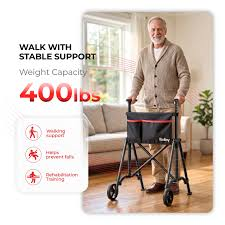
Modern walkers with seats come in a variety of designs, including rolling walkers, four-wheel rollators, folding walkers, and lightweight mobility aids. Many models feature adjustable handles, hand brakes, padded seats, backrests, storage baskets, and folding frames. These features can make everyday mobility more manageable while providing additional convenience.
Choosing the right walker with seat involves considering more than appearance. Frame stability, seat comfort, wheel design, weight capacity, handle height, braking performance, and portability can all influence the overall experience. A suitable mobility aid should match the user's individual needs and the environment where it will be used.
Walker With Seat for Everyday Mobility
A walker with seat is designed to provide support while walking and a convenient resting surface when the user needs a break. This combination can be particularly useful during activities that involve moving around for extended periods. A traditional walking frame provides support, but a rollator with seat adds the advantage of integrated seating.
Many four-wheel walkers with seats use hand-operated brakes. These brakes allow the user to control movement and secure the walker when stopping. Before sitting, the walker should be positioned securely and the brakes should be engaged according to the manufacturer's instructions.
A lightweight walker with seat can be easier to transport and maneuver. Lightweight frames are often made from materials such as aluminum, which can provide a practical balance between strength and manageable weight. A folding walker with seat can be especially convenient for people who need to store their mobility aid in a vehicle or limited storage area.
The seat itself can vary considerably between models. Some walkers feature simple molded seats, while others include padded surfaces and backrests for additional comfort. Users who expect to take frequent rest breaks may prefer a walker with a wider or more comfortably designed seat, provided that the overall dimensions and weight capacity remain appropriate.
Features of a Comfortable Walker With Seat
A comfortable walker with seat should provide a suitable combination of stability, usability, and convenience. Adjustable handles are an important feature because users can position them according to their height and the manufacturer's recommended adjustment range. Correct handle positioning can contribute to a more comfortable posture while walking.
Wheel size also affects the overall design. Smaller wheels may work well on smooth indoor flooring, while larger wheels can be more suitable for certain outdoor surfaces. A four-wheel rollator may offer smooth movement, but users should become familiar with its brakes and handling before using it regularly.
A walker with seat and basket can provide additional convenience during shopping or outdoor activities. The storage compartment can hold lightweight personal belongings, reducing the need to carry items in the hands. Storage capacity should remain within the manufacturer's recommendations, and heavy or unstable loads should be avoided.
Portability is another important consideration. A folding rollator with seat can be easier to transport in a car and may take up less storage space at home. For people who frequently travel to appointments or visit different locations, a portable walker with seat can provide practical flexibility.
Weight capacity should always be checked before selecting a mobility aid. Every walker has a specified maximum user weight, and choosing a model that meets the user's requirements is essential for safe and dependable use. Heavy-duty walkers with seats are also available for individuals who require a sturdier frame and higher weight capacity.
Walker With Seat for Home, Shopping, and Outdoor Use
A walker with seat can be useful in many everyday environments. At home, it may help users move between rooms while providing a convenient place to rest. In homes with narrow hallways or small doorways, the dimensions of the walker are particularly important. A compact or narrow rollator may be easier to maneuver in confined spaces, although stability and comfort should remain priorities.
For shopping trips, a rollator walker with seat can provide both mobility support and storage. The user can move through suitable areas with the walker and stop for a rest when necessary. Some designs include baskets or bags that can be useful for carrying small personal items.
Outdoor use may require additional consideration. A walker with larger wheels can be useful on certain paved surfaces, while dependable brakes can provide better control during movement and stopping. Users should always follow the manufacturer's recommendations regarding terrain and should avoid surfaces that may compromise stability.
Travel is another situation where a folding walker with seat can be beneficial. A foldable design may fit more conveniently into a vehicle, making it easier to take the mobility aid to medical appointments, family gatherings, shopping centers, or other destinations.
For seniors, a walker with seat can provide a combination of mobility assistance and resting convenience. However, the best model depends on the individual's mobility requirements, strength, balance, environment, and ability to operate the walker safely.
Safe Use and Maintenance
Correct use of a walker with seat is essential for maintaining reliable support. Before regular use, users should read the manufacturer's instructions and become familiar with the brakes, seat, wheels, frame, and folding mechanism. The handles should be adjusted according to the recommended height range.
A rollator with seat should be completely stopped before the user sits down. The brakes should be engaged securely, and the walker should be positioned on a stable, suitable surface. The seat should not be treated as a moving platform or used while the walker is rolling.
Routine maintenance can help keep a walker functioning properly. Wheels should move smoothly, brakes should operate correctly, and the frame should remain secure. Folding mechanisms and locking components should also be inspected regularly. If any part becomes damaged or loose, the walker should be checked according to the manufacturer's guidance before continued use.
Users should also avoid exceeding the walker's recommended weight capacity. The storage basket or pouch should not be overloaded, as excessive weight can affect handling and stability. When uncertainty exists about choosing or using a mobility aid, guidance from a qualified healthcare or mobility professional can be helpful.
Conclusion
A walker with seat can be a convenient mobility solution for people who need walking assistance while also wanting an accessible place to rest. Features such as four wheels, hand brakes, adjustable handles, padded seating, backrests, storage baskets, and folding frames can make different models suitable for a variety of everyday situations.
The best walker with seat should be selected according to individual mobility needs, comfort preferences, weight capacity, home environment, and intended use. A lightweight folding walker may be convenient for transportation, while a heavy-duty rollator with seat may provide a stronger construction for users who require additional capacity.
43.242.176.77
shell
ผู้เยี่ยมชม
benducket3211@gmail.com